
As data grows faster than ever before, single servers simply can’t keep up. Whether you’re streaming a movie, syncing cloud backups, or analyzing terabytes of sensor data, your information isn’t sitting on one machine. It’s spread across many — possibly across continents.
This is where distributed file storage comes in. It’s the backbone of modern computing — powering systems like Google Drive, Dropbox, Netflix, and Amazon S3. These platforms depend on the principles of distributed file storage to make data accessible, reliable, and scalable at a global scale.
Let’s unpack how distributed file storage works, why it’s essential, and what makes it one of the most critical pillars of cloud computing.

What is distributed file storage?
Distributed file storage refers to storing and managing data across multiple servers or nodes instead of a single centralized machine. The goal is to make this distributed data appear seamless — as if all files reside on one logical system.
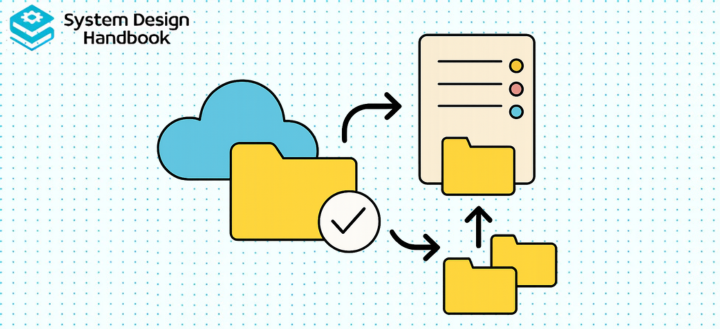
Each file is divided into smaller chunks or blocks, which are distributed among multiple nodes. A central or replicated metadata service tracks where each piece is stored and manages retrieval when needed.
Key characteristics include:
- Transparency: Users and applications see one logical storage system, even though data lives on many machines.
- Replication: Multiple copies of each data block are stored to prevent loss.
- Scalability: Nodes can be added easily to expand storage and throughput.
- Fault tolerance: The system can self-heal after node or disk failures.
For example, Google File System (GFS) and its open-source successor HDFS (Hadoop Distributed File System) are designed to handle petabytes of data distributed across commodity hardware, achieving near-constant availability.
Why distributed storage matters
The rise of distributed storage is a direct response to the explosion of global data and the demand for always-on access. Traditional single-server storage simply can’t deliver the scale, speed, and reliability required today.
1. Scalability
Distributed systems enable horizontal scaling — instead of buying a bigger server, you can add more machines to expand capacity. This makes scaling linear and cost-effective.
2. Fault tolerance
In a distributed system, every piece of data is replicated across multiple nodes. If one fails, replicas on other nodes ensure uninterrupted service. The system detects and replaces failed nodes automatically.
3. Performance and parallelism
Because data is split into chunks, it can be read or written from multiple machines simultaneously. This parallel access drastically improves throughput, making distributed systems ideal for analytics, machine learning, and real-time applications.
4. Global availability
Data replication across regions reduces latency. A user in Europe can access their files from a nearby data center rather than waiting for transcontinental retrieval.
5. Cost efficiency
Distributed file storage allows the use of commodity hardware — affordable, easily replaceable servers — while maintaining reliability through software-level redundancy. This design philosophy underpins systems like HDFS, Ceph, and GlusterFS.
In essence, distributed file storage merges performance, scalability, and resilience — the trifecta that modern digital systems demand.
How distributed file storage works
The architecture of a distributed file storage system typically includes two major roles: data nodes and metadata nodes.
1. Data nodes
Data nodes store the actual file blocks. Each node is responsible for:
- Handling read and write requests.
- Managing replication.
- Reporting health and storage capacity to the master node.
When a data node fails, the system automatically redistributes its data to maintain the required replication factor.
2. Metadata or master node
The master node maintains metadata — essentially, a map of which blocks belong to which files and where they reside. It does not store file content but keeps track of relationships and system state.
For instance, when you upload a file:
- The master node splits it into smaller blocks.
- Assigns those blocks to multiple data nodes.
- Updates the metadata mapping for future retrieval.
Some systems (like Ceph) use decentralized metadata services to eliminate single points of failure, while others replicate the master node for redundancy.
3. Replication and consistency
Most distributed systems maintain multiple replicas of each block (often three). This redundancy ensures fault tolerance and high availability.
However, replication introduces challenges in consistency — ensuring all copies reflect the latest data. Systems choose between models such as:
- Strong consistency: All replicas are immediately updated.
- Eventual consistency: Updates propagate asynchronously but converge over time.
Choosing the right model depends on workload — banking apps need strong consistency, while file sharing systems can tolerate eventual consistency.
4. Client interaction
When a client reads or writes data:
- It first queries the master for metadata.
- Then communicates directly with data nodes for the actual file transfer.
This decentralized access avoids bottlenecks and allows concurrent operations across nodes — a key design principle that makes distributed file storage fast and scalable.
Examples of distributed file storage systems
Let’s look at some real-world systems that implement these principles:
| System | Description | Use Case |
| HDFS (Hadoop Distributed File System) | Built for big data analytics. Optimized for high throughput rather than low latency. | Batch processing with Hadoop or Spark |
| Google File System (GFS) | Proprietary system that powers Google’s internal data infrastructure. | Web indexing, distributed computing |
| Ceph | Open-source, object-based storage system offering unified file, block, and object interfaces. | Cloud infrastructure, Kubernetes clusters |
| Amazon S3 | Managed object storage service offering 99.999999999% durability. | Cloud-native app storage, backups |
| GlusterFS | Open-source scalable file system that aggregates disks across servers into one namespace. | Enterprise archiving, shared storage |
These systems embody the trade-offs of the CAP theorem — balancing consistency, availability, and partition tolerance based on specific business needs.
Challenges in distributed file storage
Despite its strengths, distributed storage introduces unique engineering challenges:
- Consistency management
Keeping replicas synchronized is non-trivial, especially under high write loads or network partitions. - Network overhead and latency
Every data transfer involves network communication, which can affect performance compared to local disk operations. - Load balancing and data placement
Systems must intelligently distribute data and replicas to avoid hotspots while optimizing for performance and reliability. - Failure detection and recovery
Distributed systems must continuously monitor node health, re-replicate lost data, and rebalance workloads automatically. - Security and compliance
Storing data across multiple nodes and regions introduces security risks. Modern systems use encryption, access control, and audit logging to mitigate threats. - Metadata scalability
As data grows, the metadata service must handle billions of file mappings efficiently. Advanced systems like Ceph and GFS use distributed metadata servers to overcome this bottleneck.
Research continues to evolve around improving replication algorithms, reducing data transfer costs, and optimizing reliability under extreme scale.
Why distributed storage powers the modern world
Distributed file storage is everywhere — often invisible, yet essential. It’s the silent infrastructure behind:
- Streaming platforms like Netflix and YouTube, which deliver content reliably to millions of users.
- Cloud storage services like Google Drive, Dropbox, and OneDrive, which allow seamless access from any device.
- Enterprise systems that need secure, fault-tolerant storage for massive datasets.
- AI and machine learning workloads that process petabytes of training data efficiently using distributed systems like HDFS and S3.
Without distributed storage, the scalability and reliability we take for granted online would be impossible.
Wrapping up
Distributed file storage is the unseen architecture powering the digital age. By dividing, replicating, and distributing data across multiple machines, it ensures the durability, performance, and scalability that define modern computing.
From streaming platforms to cloud infrastructure, every large-scale service depends on these systems to keep data secure and accessible — no matter where in the world it’s needed.
For software engineers, understanding distributed file storage unlocks insights into how cloud platforms, databases, and distributed systems achieve resilience at scale.
Happy learning!