
If you have spent several years writing code, mentoring teammates, and leading small initiatives, you may have started asking yourself how to become an engineering manager. It is one of the most common career transitions for senior engineers. It is also one of the most misunderstood.
Many developers assume that becoming an engineering manager is simply the next step after senior engineer. In reality, it is a role change, not just a promotion. The focus shifts from writing code to building teams. Your output is no longer measured by features delivered personally but by how effectively your team performs.
This guide will walk you through how to become engineering manager in a structured and realistic way. You will learn the skills required, the mindset shift involved, the responsibilities of the role, and how to prepare for the transition strategically.

What Does An Engineering Manager Actually Do?
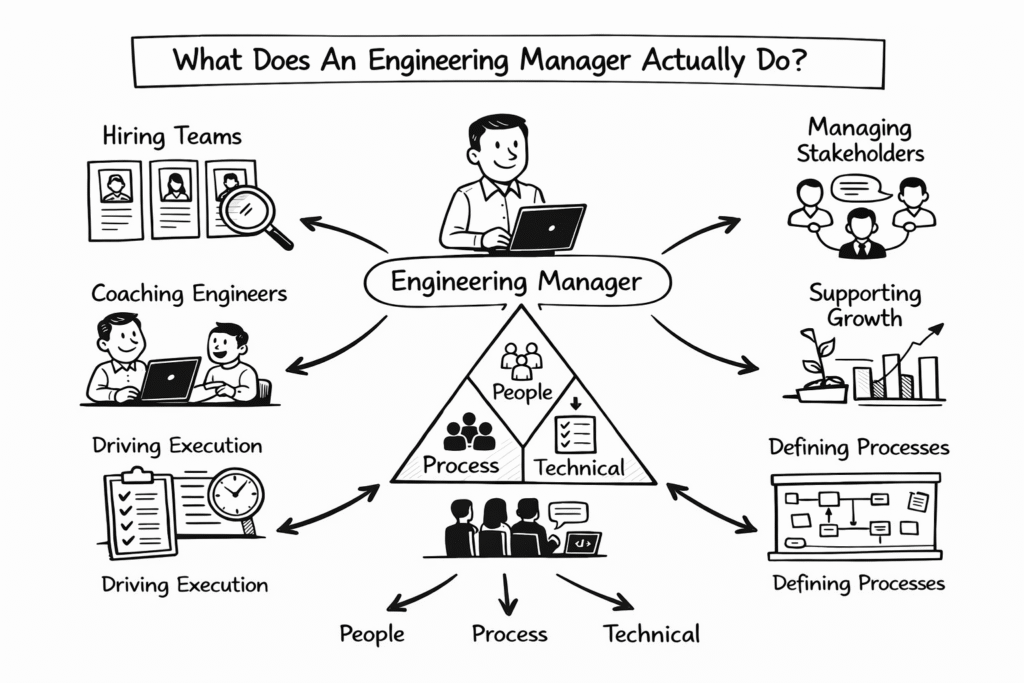
Before exploring how to become engineering manager, it is important to understand what the role entails. An engineering manager operates at the intersection of people, process, and technical direction.
At its core, the role includes:
- Hiring and building teams
- Coaching and mentoring engineers
- Driving execution and delivery
- Managing stakeholder communication
- Defining team processes
- Supporting career growth
Unlike individual contributors, engineering managers rarely spend their days coding. Instead, they remove blockers, align priorities, and ensure that systems and teams function efficiently.
Engineering Manager Vs Senior Engineer
Understanding the difference clarifies the transition path.
| Area Of Focus | Senior Engineer | Engineering Manager |
| Primary Output | Code and technical solutions | Team performance and delivery |
| Scope | Technical implementation | People, process, and delivery |
| Influence | Technical decisions | Organizational and team decisions |
| Metrics | Code quality and system reliability | Team health and project outcomes |
The transition requires a shift from technical depth to organizational breadth.
Why Engineers Want To Become Managers
Many developers explore how to become an engineering manager for different reasons. Some want to expand their influence. Others enjoy mentoring. Some seek career growth or broader impact.
Common motivations include:
- Desire to shape team direction
- Interest in mentoring and coaching
- Increased ownership and responsibility
- Career advancement and compensation growth
However, it is important to recognize that management is not the only growth path. Many organizations offer senior individual contributor tracks, such as staff engineer or principal engineer roles.
Choosing management should align with your interests, not just your career ladder.
Core Skills Required To Become Engineering Manager
If you are serious about learning how to become engineering manager, you must intentionally build non-technical skills.
Leadership And Communication
Leadership is not authority. It is influence. Engineering managers must communicate clearly with engineers, product managers, executives, and stakeholders.
Strong communication includes:
- Setting expectations clearly
- Giving constructive feedback
- Conducting difficult conversations
- Managing conflicts
- Aligning cross-functional teams
Without effective communication, even technically strong managers struggle.
People Development And Coaching
A major part of how to become engineering manager involves learning to develop others. This includes conducting one-on-ones, creating growth plans, and supporting performance improvement.
Managers must understand each team member’s strengths, weaknesses, and career aspirations. Coaching requires patience, empathy, and consistency.
Execution And Project Management
Engineering managers own delivery. They must balance timelines, scope, and resources.
| Skill Area | Why It Matters |
| Roadmap Planning | Aligns team efforts with business goals |
| Risk Management | Prevents delays and surprises |
| Resource Allocation | Ensures balanced workloads |
| Stakeholder Updates | Maintains transparency |
While you do not need to become a project manager, you must understand execution frameworks such as Agile or Scrum.
Technical Credibility
Although engineering managers do not code daily, they must maintain enough technical depth to earn team respect.
Technical credibility enables:
- Evaluating architectural decisions
- Reviewing design proposals
- Challenging unrealistic timelines
- Supporting complex problem solving
Losing touch with technical fundamentals can weaken leadership effectiveness.
The Mindset Shift From Engineer To Manager
Understanding how to become engineering manager requires internal transformation.
As an engineer, you solve problems directly. As a manager, you solve problems indirectly by empowering others.
Instead of writing the best solution yourself, you guide your team toward the best solution. Instead of optimizing your productivity, you optimize team performance.
This mindset shift includes:
- Delegating rather than executing everything
- Accepting reduced individual visibility
- Prioritizing team growth over personal recognition
- Thinking long-term about talent development
Many new managers struggle because they hold on to coding responsibilities too tightly.
Career Path To Become Engineering Manager
There is no single path, but common progression patterns exist.
| Career Stage | Typical Focus |
| Mid-Level Engineer | Building technical depth |
| Senior Engineer | Leading features and mentoring |
| Tech Lead | Driving architecture and coordination |
| Engineering Manager | Managing people and delivery |
Serving as a tech lead often prepares engineers for management. It introduces coordination, cross-team communication, and partial ownership of execution.
Practical Steps On How To Become Engineering Manager
If you are actively planning your transition, these steps will help.
Step 1: Start Mentoring
Begin mentoring junior engineers. Conduct informal coaching sessions. Offer code review feedback that focuses on learning rather than correction.
Mentorship builds credibility and develops coaching skills.
Step 2: Volunteer For Leadership Opportunities
Lead sprint planning sessions. Coordinate cross-team initiatives. Own retrospectives.
Demonstrating leadership before holding the title strengthens your case for promotion.
Step 3: Improve Communication Skills
Practice presenting technical designs to non-technical audiences. Facilitate meetings. Seek feedback on clarity and tone.
Communication is one of the most critical competencies in how to become engineering manager.
Step 4: Learn Performance Management
Study how performance reviews work in your organization. Observe how current managers handle feedback conversations.
Understanding performance evaluation processes prepares you for management responsibilities.
Step 5: Have Career Conversations With Your Manager
Be explicit about your aspirations. Tell your manager you are interested in becoming an engineering manager.
Ask for:
- Growth feedback
- Leadership opportunities
- Stretch assignments
Transparency accelerates progression.
Common Interview Questions For Engineering Manager Roles
If you are interviewing for the role, expect behavioral, situational, and technical interview questions.
Interviewers may ask about:
- Handling underperforming engineers
- Resolving team conflicts
- Managing missed deadlines
- Navigating stakeholder disagreements
- Balancing technical debt with feature delivery
Unlike technical interviews, these questions evaluate judgment and emotional intelligence.
Engineering Manager Interview Evaluation Criteria
Understanding evaluation dimensions helps with preparation.
| Evaluation Dimension | What Interviewers Assess |
| Leadership | Ability to inspire and guide |
| Conflict Resolution | Calm handling of disagreements |
| Execution | Delivery discipline and prioritization |
| Coaching | Talent development capability |
| Strategic Thinking | Long-term planning mindset |
Candidates often underestimate how much behavioral examples matter.
Challenges New Engineering Managers Face
The transition is rarely smooth.
One common challenge is imposter syndrome. Engineers who were experts in coding may feel inexperienced in management.
Another challenge is balancing technical involvement. Staying too involved prevents delegation. Stepping away completely can weaken credibility.
Managing former peers can also be difficult. Clear boundaries and professional communication are essential.
Compensation And Growth As Engineering Manager
Compensation often increases due to expanded scope and responsibility.
| Role Level | Approximate Scope |
| Engineering Manager I | Manages a small team |
| Engineering Manager II | Manages multiple teams |
| Senior Engineering Manager | Oversees a larger organization |
| Director Of Engineering | Leads multiple managers |
Long-term progression can move toward director, VP of engineering, or CTO roles.
However, growth depends on consistent leadership impact, not just tenure.
When You Should Not Become Engineering Manager
Learning how to become engineering manager also means knowing when not to pursue it.
If you deeply enjoy coding and problem-solving and dislike people management tasks, the individual contributor track may suit you better.
Engineering management involves:
- Frequent meetings
- Performance conversations
- Conflict resolution
- Administrative responsibilities
It is less about building systems and more about building people.
Developing Long-Term Management Excellence
Once you become an engineering manager, continuous learning remains essential.
Invest in leadership books and management courses. Seek mentorship from experienced directors. Request feedback from your team regularly.
Leadership is a craft that improves through reflection and practice.
Final Thoughts
Understanding how to become engineering manager requires more than technical excellence. It demands emotional intelligence, communication skills, and a genuine interest in helping others grow.
The transition from engineer to manager is a shift in identity. Your success will no longer be defined by the code you write but by the engineers you develop and the teams you build.
If you intentionally build leadership skills, seek feedback, and practice mentorship early, you will position yourself strongly for this career move.
Becoming an engineering manager is not about climbing a ladder. It is about expanding your impact.