
Heartbeat In Distributed Systems: A Complete Guide To System Reliability
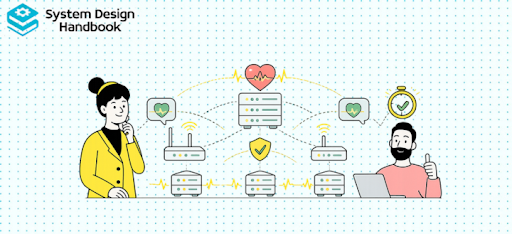
When you hear the term heartbeat in distributed systems, it refers to a simple but essential mechanism where nodes periodically send signals to indicate that they are alive. These signals act as a continuous check between components in a system, ensuring that everything is functioning as expected. Without this mechanism, systems would struggle to detect failures in real time.
You can think of heartbeat as a regular “I am alive” message exchanged between nodes. If a node stops sending these signals, other parts of the system assume something has gone wrong. This simple idea forms the backbone of failure detection in distributed environments.
Why Heartbeats Are Necessary In Modern Systems
In distributed systems, there is no central authority that knows the exact state of every node at all times. Each node operates independently and communicates over a network that can be unreliable. This makes it difficult to determine whether a node has failed or is simply slow to respond.
Heartbeat mechanisms solve this uncertainty by providing a consistent way to monitor node health. They allow systems to detect issues early and take corrective actions such as rerouting traffic or initiating recovery processes. This is critical for maintaining reliability and availability.
Real-World Examples Of Heartbeat Usage
You interact with systems that rely on heartbeat mechanisms more often than you realize. In microservices architectures, services continuously check each other’s health using heartbeats. Similarly, distributed databases use heartbeats to monitor replicas and ensure consistency.
Even orchestration platforms like Kubernetes rely heavily on heartbeat signals to determine whether containers are healthy. These systems use heartbeat-based checks to decide when to restart services or redistribute workloads. This demonstrates how fundamental heartbeat mechanisms are in real-world systems.
Why Heartbeat Matters For Interviews And System Design
When preparing for System Design interviews, heartbeat in distributed systems often appears as part of failure detection discussions. Interviewers expect you to understand how systems detect node failures and maintain reliability. Even if the term “heartbeat” is not explicitly mentioned, the concept is almost always relevant.
In real-world engineering, heartbeat mechanisms are essential for building resilient systems. They enable systems to respond to failures quickly and maintain stability under unpredictable conditions. Understanding this concept helps you design systems that are both robust and scalable.
Why Failure Detection Is Critical In Distributed Systems
Failures in distributed systems are not rare events but expected occurrences. Nodes can crash, networks can become unreliable, and services can become unresponsive. These failures can happen at any time and often without warning.
Unlike single-machine systems, failures in distributed environments are partial. Some nodes may fail while others continue to operate, which creates complexity in detecting and handling these issues. This makes failure detection a critical component of System Design.
Distinguishing Between Failure And Delay
One of the biggest challenges in distributed systems is distinguishing between an actual failure and a temporary delay. A node that is slow to respond may appear as if it has failed, even though it is still functioning. This ambiguity makes failure detection inherently difficult.
Heartbeat mechanisms help address this challenge by providing continuous signals. However, even with heartbeats, you must carefully design thresholds to avoid misinterpreting delays as failures. This balance is a key part of System Design.
Impact Of Undetected Failures
If failures are not detected promptly, they can have serious consequences. Requests may continue to be routed to failed nodes, leading to poor user experience and system instability. In some cases, undetected failures can cause data inconsistencies.
Early detection allows systems to take corrective actions quickly. This includes rerouting traffic, promoting backup nodes, or initiating recovery processes. Without effective failure detection, maintaining reliability becomes extremely difficult.
Role Of Heartbeat In Maintaining System Health
Heartbeat mechanisms provide a continuous stream of information about node health. By monitoring these signals, systems can detect failures and respond accordingly. This makes heartbeat a central component of maintaining system stability.
The table below highlights how failure detection impacts system behavior:
| Scenario | Without Heartbeat | With Heartbeat |
|---|---|---|
| Node Failure | Delayed detection | Immediate awareness |
| Traffic Routing | Sent to failed nodes | Redirected to healthy nodes |
| System Stability | Unpredictable | Controlled and reliable |
This comparison shows why heartbeat mechanisms are essential for reliable distributed systems.
How Heartbeat Mechanisms Work
At its core, a heartbeat mechanism involves periodic communication between nodes. One node sends a signal at regular intervals, and another node listens for these signals. As long as the signals are received within a specified time frame, the node is considered healthy.
This process creates a continuous feedback loop that allows the system to monitor node health. It is simple in concept but highly effective in practice. This simplicity is what makes heartbeat mechanisms widely used.
Roles Of Sender And Receiver
In a heartbeat system, nodes can act as senders, receivers, or both. A sender transmits heartbeat signals at regular intervals, while a receiver monitors these signals and checks for their arrival. In many systems, nodes perform both roles simultaneously.
This dual role allows nodes to monitor each other in a decentralized manner. It reduces reliance on a central authority and improves system resilience. This approach is common in modern distributed systems.
Timeouts And Failure Detection
A key aspect of heartbeat mechanisms is the use of timeouts. If a receiver does not receive a heartbeat within a specified time, it assumes that the sender has failed. This triggers corrective actions such as failover or re-election.
Choosing the right timeout value is critical. If the timeout is too short, the system may detect false failures. If it is too long, failure detection becomes slow. Balancing this trade-off is essential for effective System Design.
What Happens When A Heartbeat Is Missed
When a heartbeat is missed, the system does not immediately assume failure. Instead, it may wait for multiple missed signals before taking action. This helps reduce false positives caused by temporary network issues.
Once a failure is confirmed, the system initiates recovery mechanisms. This may include rerouting traffic, restarting services, or electing a new leader. This process ensures that the system continues to operate despite failures.
Heartbeat Mechanism Overview
| Component | Function | Outcome |
|---|---|---|
| Sender | Sends periodic signals | Indicates node health |
| Receiver | Monitors signals | Detects failures |
| Timeout | Defines failure threshold | Triggers recovery |
| Recovery Mechanism | Responds to failures | Maintains system stability |
Understanding this flow helps you visualize how heartbeat mechanisms operate in real systems.
Types Of Heartbeat Mechanisms
Active Heartbeat Mechanisms
Active heartbeat mechanisms involve nodes actively sending signals to check the health of other nodes. This is often implemented using ping-like requests, where one node periodically checks another. This approach provides direct and immediate feedback about node status.
Active mechanisms are simple to implement and easy to understand. However, they can introduce additional network overhead, especially in large systems. This makes them suitable for smaller or moderately sized clusters.
Passive Heartbeat Mechanisms
Passive heartbeat mechanisms rely on monitoring existing communication rather than sending dedicated signals. For example, if a node regularly sends requests as part of normal operations, these can be used to infer its health. This reduces the need for additional network traffic.
While passive mechanisms are more efficient, they may not provide as precise failure detection. They depend on existing communication patterns, which may not always be consistent. This trade-off must be considered during System Design.
Push Vs Pull Models
Heartbeat systems can also be categorized based on how signals are transmitted. In a push model, nodes send heartbeat signals proactively to other nodes. In a pull model, a central system queries nodes to check their status.
Each approach has its advantages. Push models provide faster detection, while pull models offer centralized control. The choice depends on the system’s requirements and architecture.
Centralized Vs Decentralized Monitoring
In centralized monitoring, a single node or service is responsible for collecting heartbeat signals from all nodes. This simplifies monitoring but creates a potential single point of failure. Decentralized monitoring distributes this responsibility across nodes.
Decentralized systems are more resilient because they do not rely on a single component. However, they are more complex to implement. Choosing between these approaches requires careful consideration of trade-offs.
Types Of Heartbeat Mechanisms Compared
| Type | Approach | Strength | Trade-Off |
|---|---|---|---|
| Active Heartbeat | Direct signaling | Accurate detection | Higher overhead |
| Passive Heartbeat | Monitor existing traffic | Lower overhead | Less precise |
| Push Model | Nodes send signals | Faster detection | Increased network usage |
| Pull Model | Central system queries nodes | Centralized control | Slower detection |
| Centralized Monitoring | Single monitoring point | Simplicity | Single point of failure |
| Decentralized Monitoring | Distributed monitoring | High resilience | Increased complexity |
These variations give you flexibility in designing heartbeat mechanisms for different types of distributed systems.
Heartbeat Interval And Timeout Design
When you design heartbeat in distributed systems, one of the most important decisions you make is how frequently heartbeats are sent and how long the system waits before declaring a failure. These timing parameters directly affect how quickly your system detects issues and how reliably it distinguishes between failures and delays. Poorly chosen values can lead to unstable or inefficient systems.
You are essentially balancing speed and accuracy with every timing decision. Faster detection improves responsiveness, but it increases the risk of false alarms. Slower detection reduces noise but delays recovery, which can impact user experience.
Choosing The Right Heartbeat Interval
The heartbeat interval defines how often a node sends a signal to indicate that it is alive. A shorter interval means more frequent updates, which allows the system to detect failures quickly. However, it also increases network traffic and processing overhead.
A longer interval reduces overhead but slows down failure detection. This can lead to situations where failed nodes continue to receive traffic for longer than they should. The optimal interval depends on system size, network conditions, and performance requirements.
Understanding Timeout Thresholds
The timeout threshold determines how long a system waits before declaring a node as failed after missing heartbeats. This value must be carefully tuned to account for network delays and temporary disruptions. Setting it too aggressively can lead to false positives.
On the other hand, a conservative timeout increases detection latency. This can delay critical actions such as failover or re-election. You need to strike a balance that reflects the reliability of your network and the sensitivity of your system.
Balancing Performance And Accuracy
Designing heartbeat intervals and timeouts is an exercise in trade-offs. You need to consider how your system behaves under both normal and failure conditions. This includes evaluating the impact on network load, system responsiveness, and overall stability.
The table below highlights how different configurations affect system behavior:
| Parameter Choice | Benefit | Trade-Off |
|---|---|---|
| Short Interval | Fast failure detection | Higher network overhead |
| Long Interval | Reduced overhead | Slower detection |
| Short Timeout | Quick response | False positives |
| Long Timeout | Accurate detection | Delayed recovery |
Understanding these trade-offs helps you design systems that are both efficient and reliable.
False Positives And Failure Detection Challenges
Detecting failures in distributed systems is much harder than it appears. A missed heartbeat does not always mean that a node has failed. It could be due to temporary network issues, congestion, or delays.
This uncertainty makes failure detection inherently probabilistic rather than deterministic. You are making decisions based on incomplete information, which requires careful System Design. This is why heartbeat mechanisms must be tuned thoughtfully.
Network Delays Versus Actual Failures
One of the biggest challenges is distinguishing between slow nodes and failed nodes. A node experiencing high latency may miss heartbeat deadlines even though it is still operational. Treating such nodes as failed can lead to unnecessary disruptions.
This is why systems often allow multiple missed heartbeats before declaring failure. This approach reduces false positives but introduces a delay in detection. Balancing these factors is a key design challenge.
Temporary Failures And Recovery
Distributed systems often experience transient issues that resolve on their own. These temporary failures can cause nodes to miss heartbeats briefly before recovering. Reacting too quickly to these events can destabilize the system.
By incorporating tolerance for temporary disruptions, you can design systems that are more resilient. This involves adjusting thresholds and implementing mechanisms to verify failures before taking action. This improves overall system stability.
Clock Drift And Timing Issues
Another challenge in heartbeat systems is the lack of perfectly synchronized clocks across nodes. Small differences in timing can lead to inconsistencies in how heartbeats are interpreted. This can affect failure detection accuracy.
To mitigate this, systems rely on relative timing rather than absolute timestamps. This reduces the impact of clock drift and improves reliability. However, it also adds complexity to the design.
Failure Detection Challenges Overview
| Challenge | Description | Impact On System |
|---|---|---|
| Network Delays | Slow communication | False failure detection |
| Temporary Outages | Short-lived disruptions | Unnecessary recovery actions |
| Clock Drift | Unsynchronized timing | Detection inaccuracies |
| Uncertain Signals | Incomplete information | Complex decision-making |
Understanding these challenges helps you design more robust heartbeat systems.
Heartbeat In Leader Election And Consensus
Heartbeat mechanisms play a crucial role in leader-based distributed systems such as those using the Raft consensus algorithm. Leaders periodically send heartbeat signals to followers to indicate that they are still active. These signals maintain coordination and prevent unnecessary elections.
Without heartbeats, followers would not know whether the leader is still functioning. This could lead to frequent and unnecessary leader elections, which would destabilize the system. Heartbeats provide the stability needed for consistent operation.
Detecting Leader Failure
In consensus systems, detecting leader failure quickly is essential. Followers rely on heartbeat signals to monitor the leader’s health. If heartbeats stop arriving within a specified timeout, followers assume that the leader has failed.
This triggers the leader election process, where a new leader is chosen. The speed and accuracy of this detection directly impact system availability. This is why heartbeat mechanisms are tightly integrated with consensus algorithms.
Triggering Re-Elections And Maintaining Stability
When a leader failure is detected, the system must transition smoothly to a new leader. Heartbeat mechanisms ensure that this transition happens in a controlled manner. They provide the signals needed to initiate and coordinate the election process.
At the same time, heartbeats prevent unnecessary elections during normal operation. As long as followers receive regular signals, they remain in a stable state. This balance between responsiveness and stability is critical.
Coordination Between Nodes Using Heartbeats
Heartbeats also facilitate coordination beyond leader election. They help nodes stay synchronized and aware of each other’s status. This enables consistent decision-making across the system.
In consensus systems, this coordination ensures that all nodes follow the same leader and maintain the same state. It reduces the likelihood of conflicts and improves overall reliability.
Heartbeat In Consensus Systems Overview
| Function | Role Of Heartbeat | Outcome |
|---|---|---|
| Leader Monitoring | Detect leader health | Stable coordination |
| Failure Detection | Identify leader failure | Trigger re-election |
| Election Control | Prevent unnecessary elections | System stability |
| Node Coordination | Maintain synchronization | Consistent system state |
This connection highlights how heartbeat mechanisms support core distributed consensus processes.
Heartbeat In Microservices And Cloud Systems
In microservices and cloud-based systems, services are distributed across multiple nodes and environments. These services must continuously monitor each other to ensure availability and reliability. Heartbeat mechanisms provide the foundation for this monitoring.
Without heartbeat signals, systems would struggle to detect service failures in real time. This would lead to degraded performance and poor user experience. Heartbeat ensures that systems remain responsive and resilient.
Service Health Checks And Monitoring
In microservices architectures, heartbeat mechanisms are often implemented as health checks. Services periodically report their status to monitoring systems or other services. This allows the system to track which components are functioning correctly.
Health checks enable automated responses to failures. For example, a failed service can be restarted or replaced without manual intervention. This improves system reliability and reduces downtime.
Load Balancing And Service Discovery
Heartbeat signals play a critical role in load balancing and service discovery. Load balancers use heartbeat data to determine which nodes are healthy and capable of handling requests. This ensures that traffic is routed efficiently.
Service discovery systems also rely on heartbeat signals to maintain an up-to-date view of available services. This allows new instances to be added dynamically and failed ones to be removed. This flexibility is essential for modern cloud systems.
Kubernetes And Real-World Implementations
Platforms like Kubernetes use heartbeat-based mechanisms such as liveness and readiness probes. These probes continuously check the health of containers and services. Based on these checks, Kubernetes decides whether to restart or replace components.
This automation simplifies system management and improves reliability. It allows systems to self-heal without manual intervention. This is a key advantage of using heartbeat mechanisms in cloud environments.
Heartbeat In Cloud Systems Overview
| Use Case | Role Of Heartbeat | Outcome |
|---|---|---|
| Health Checks | Monitor service status | Early failure detection |
| Load Balancing | Identify healthy nodes | Efficient traffic routing |
| Service Discovery | Track available services | Dynamic scaling |
| Orchestration | Manage containers | Automated recovery |
Understanding these applications helps you see how heartbeat mechanisms are used in modern system architectures.
Scaling Heartbeat Mechanisms In Large Systems
When you design heartbeat in distributed systems at a small scale, the mechanism feels straightforward and efficient. However, as the number of nodes grows, the volume of heartbeat messages increases significantly. This can lead to network congestion and unnecessary overhead if not handled properly.
In large-scale systems, you must think beyond simple point-to-point heartbeats. The design needs to account for thousands or even millions of nodes communicating simultaneously. This is where scaling strategies become essential.
Heartbeat Overhead In Large Clusters
In a system with many nodes, each node sending heartbeat signals to every other node creates a massive communication load. This increases network traffic and can impact system performance. As the system grows, this approach becomes unsustainable.
You need to reduce this overhead without compromising failure detection. This requires more efficient communication patterns that limit the number of messages exchanged. Designing for scale is about optimizing both performance and reliability.
Using Gossip Protocols For Scalability
One common approach to scaling heartbeat mechanisms is using gossip protocols. In this model, nodes share information with a small subset of other nodes instead of broadcasting to all nodes. Over time, this information spreads across the system.
Gossip protocols reduce network load while still providing reliable failure detection. They are particularly effective in large and dynamic systems. This makes them a popular choice for scalable distributed architectures.
Hierarchical Monitoring Approaches
Another strategy is hierarchical monitoring, where nodes are organized into groups or layers. Each group has a designated node that monitors others and reports to higher-level components. This reduces the number of direct heartbeat connections.
This approach improves scalability by distributing monitoring responsibilities. It also makes the system easier to manage and maintain. However, it introduces additional complexity in coordination.
Scaling Strategies Overview
| Approach | Description | Benefit | Trade-Off |
|---|---|---|---|
| Direct Heartbeats | All nodes communicate directly | Simple design | High overhead |
| Gossip Protocols | Partial information sharing | Scalable communication | Eventual consistency |
| Hierarchical Monitoring | Layered monitoring structure | Reduced load | Added complexity |
Choosing the right approach depends on system size, architecture, and performance requirements.
Trade-Offs In Heartbeat Design
Designing heartbeat mechanisms involves making decisions that balance competing priorities. You cannot optimize for speed, accuracy, and efficiency at the same time. Each choice introduces trade-offs that affect system behavior.
Understanding these trade-offs allows you to design systems that align with your requirements. It also helps you explain your decisions clearly in System Design interviews. This is a critical skill for any engineer.
Frequency Versus System Overhead
Increasing the frequency of heartbeat signals improves failure detection speed. However, it also increases network traffic and processing load. This can negatively impact system performance, especially at scale.
Reducing frequency lowers overhead but delays failure detection. This can lead to slower recovery and degraded user experience. Finding the right balance is essential for efficient System Design.
Accuracy Versus Responsiveness
Heartbeat systems must balance accuracy with responsiveness. Highly responsive systems detect failures quickly but may produce false positives. Highly accurate systems reduce false positives but take longer to detect issues.
This trade-off is influenced by network conditions and system requirements. You need to adjust parameters based on how critical fast detection is for your application. This decision directly impacts system reliability.
Centralized Versus Decentralized Monitoring
Centralized monitoring simplifies System Design by collecting heartbeat data in one place. However, it introduces a single point of failure and limits scalability. Decentralized monitoring distributes responsibility across nodes, improving resilience.
This approach increases complexity but enhances fault tolerance. Choosing between these models depends on your system’s scale and reliability requirements. Both approaches have their place in distributed systems design.
Trade-Offs Summary
| Trade-Off | Benefit | Cost |
|---|---|---|
| High Frequency | Fast detection | Increased overhead |
| Low Frequency | Reduced overhead | Slower detection |
| High Responsiveness | Quick reaction | False positives |
| High Accuracy | Reliable detection | Delayed response |
| Centralized Monitoring | Simplicity | Single point of failure |
| Decentralized Monitoring | Resilience | Increased complexity |
Being able to explain these trade-offs is essential for both real-world System Design and interviews.
Common Mistakes When Designing Heartbeat Systems
Using Aggressive Timeouts
One of the most common mistakes is setting timeouts that are too short. This causes the system to declare failures prematurely, even when nodes are only experiencing temporary delays. This leads to unnecessary recovery actions.
These false positives can destabilize the system and reduce overall reliability. You need to design timeouts that account for network variability and transient issues. This ensures more accurate failure detection.
Ignoring Network Variability
Distributed systems operate over networks that are inherently unpredictable. Ignoring this variability can lead to poor heartbeat design. Network latency, congestion, and packet loss all affect how heartbeats are received.
You must design your system to tolerate these variations. This includes setting appropriate thresholds and incorporating retries. This improves robustness and reduces false alarms.
Creating A Single Point Of Failure
Centralized heartbeat systems can become a bottleneck and a single point of failure. If the monitoring node fails, the entire system loses visibility into node health. This can lead to widespread issues.
To avoid this, you should consider decentralized or redundant monitoring approaches. This ensures that failure detection continues even if some components fail. It improves overall system resilience.
Poor Integration With Recovery Mechanisms
Heartbeat mechanisms are only effective if they are integrated with recovery processes. Detecting a failure without taking action does not improve system reliability. Recovery mechanisms must be triggered automatically.
This includes actions like failover, restarting services, or rerouting traffic. Without proper integration, heartbeat signals provide limited value. Designing end-to-end systems is essential.
Common Pitfalls Overview
| Mistake | What Happens | Impact |
|---|---|---|
| Aggressive Timeouts | False failure detection | System instability |
| Ignoring Network Issues | Misinterpreted signals | Reduced reliability |
| Centralized Monitoring | Single point of failure | System vulnerability |
| Weak Recovery Integration | No corrective action | Ineffective failure handling |
Avoiding these mistakes helps you build more reliable and scalable systems.
How To Use Heartbeat Concepts In System Design Interviews
Heartbeat in distributed systems often appears indirectly in System Design interviews. You may be asked how your system detects failures or maintains availability. This is where heartbeat mechanisms come into play.
Understanding how to incorporate heartbeat into your design shows that you think about real-world reliability. It demonstrates that you can handle failures effectively. This is a key expectation in System Design interviews.
Explaining Failure Detection Clearly
When discussing failure detection, you should explain how heartbeat signals are used to monitor node health. You should also mention timeouts and thresholds that determine when a node is considered failed. This shows a practical understanding of system behavior.
You should avoid vague explanations and focus on specifics. This includes how often signals are sent and how failures are handled. Clear explanations make your answers more convincing.
Incorporating Heartbeat Into System Design
You can use heartbeat mechanisms in various design scenarios. For example, in a distributed database, heartbeats can detect replica failures. In microservices, they can monitor service health.
Explaining where and how you use heartbeats adds depth to your design. It shows that you understand how systems operate under failure conditions. This strengthens your overall answer.
Demonstrating Trade-Off Thinking
Interviewers value your ability to reason about trade-offs. When discussing heartbeat mechanisms, you should explain the balance between detection speed and accuracy. This demonstrates a deeper understanding of System Design.
You should also discuss scalability and performance considerations. This shows that you can design systems that work in real-world conditions. Strong reasoning is what sets you apart.
Interview Preparation Overview
| Focus Area | What You Explain | Outcome |
|---|---|---|
| Failure Detection | Use of heartbeat signals | Practical understanding |
| System Design Integration | Applying heartbeat in systems | Strong design answers |
| Trade-Off Analysis | Balancing speed and accuracy | Better reasoning |
| Communication | Clear explanations | Higher interview confidence |
A structured approach helps you present your ideas effectively.
Using structured prep resources effectively
Use Grokking the System Design Interview on Educative to learn curated patterns and practice full System Design problems step by step. It’s one of the most effective resources for building repeatable System Design intuition.
You can also choose the best System Design study material based on your experience:
Final Thoughts On Heartbeat In Distributed Systems
Heartbeat in distributed systems may seem like a simple mechanism, but it plays a critical role in system reliability. It enables systems to detect failures, coordinate actions, and maintain stability. Without it, distributed systems would struggle to operate effectively.
This simplicity is what makes heartbeat so powerful. It provides a reliable foundation for more complex mechanisms like consensus and leader election. Understanding it is essential for any engineer working with distributed systems.
From Basic Signals To Complex Systems
As you explore distributed systems further, you will see how heartbeat mechanisms integrate with other components. They support consensus algorithms, enable fault tolerance, and power modern cloud architectures. This makes them a key building block.
The knowledge you gain from understanding heartbeat extends to many areas of System Design. It helps you think about reliability, scalability, and performance in a structured way. This is valuable both in interviews and real-world engineering.
Your Next Step As An Engineer
At this point, your next step is to apply these concepts in practice. Start thinking about how heartbeat mechanisms fit into different System Designs. This hands-on approach helps you internalize what you have learned.
The goal is not just to understand heartbeat but to use it effectively. Once you reach that level, you will be able to design systems that are both resilient and scalable.