
Practicing the right questions after a course matters as much as finishing it. These fifteen prompts are generic ones that map to designs in Grokking Modern System Design Interview on Educative, so each question points back to the lesson that prepares you.
Each question gives you a prompt, the lessons to review, and one added challenge to practice. None of them is a company’s real interview question.
Questions from course design problems
1. Design a URL shortener that reports click counts
Start with the TinyURL design, which covers requirements, estimates, a sequencer, a cache, and a rate limiter that limits each caller by its api_dev_key.
Now every redirect also writes a count. The sharded counters lessons show how to spread one hot counter across shards. Ask how exact the counts must be.
2. Design a web crawler that stays polite to each site
Revisit the web crawler design, which names a scheduler, a Domain Name System (DNS) resolver, a HyperText Markup Language (HTML) fetcher, an extractor, a duplicate eliminator, and a blob store.
Politeness is the added challenge. The lesson lists crawler traps such as query parameters, calendar pages, and cyclic directories, and defenses such as depth and page limits, robots.txt, and pacing requests by time to first byte. Say which defense you would add first.
Try it on the crawler by listing the components you can name before you reopen the lesson.
3. Design autocomplete for a search box
Look at the Typeahead design. It stores prefixes in a trie, keeps frequencies at terminal nodes, partitions data by prefix range such as A–M and N–Z, and refreshes suggestions offline about every 15 minutes through MapReduce.
Add a trending prefix that gets far more traffic than the rest. Decide how fresh suggestions must be and how you would spread a hot prefix.
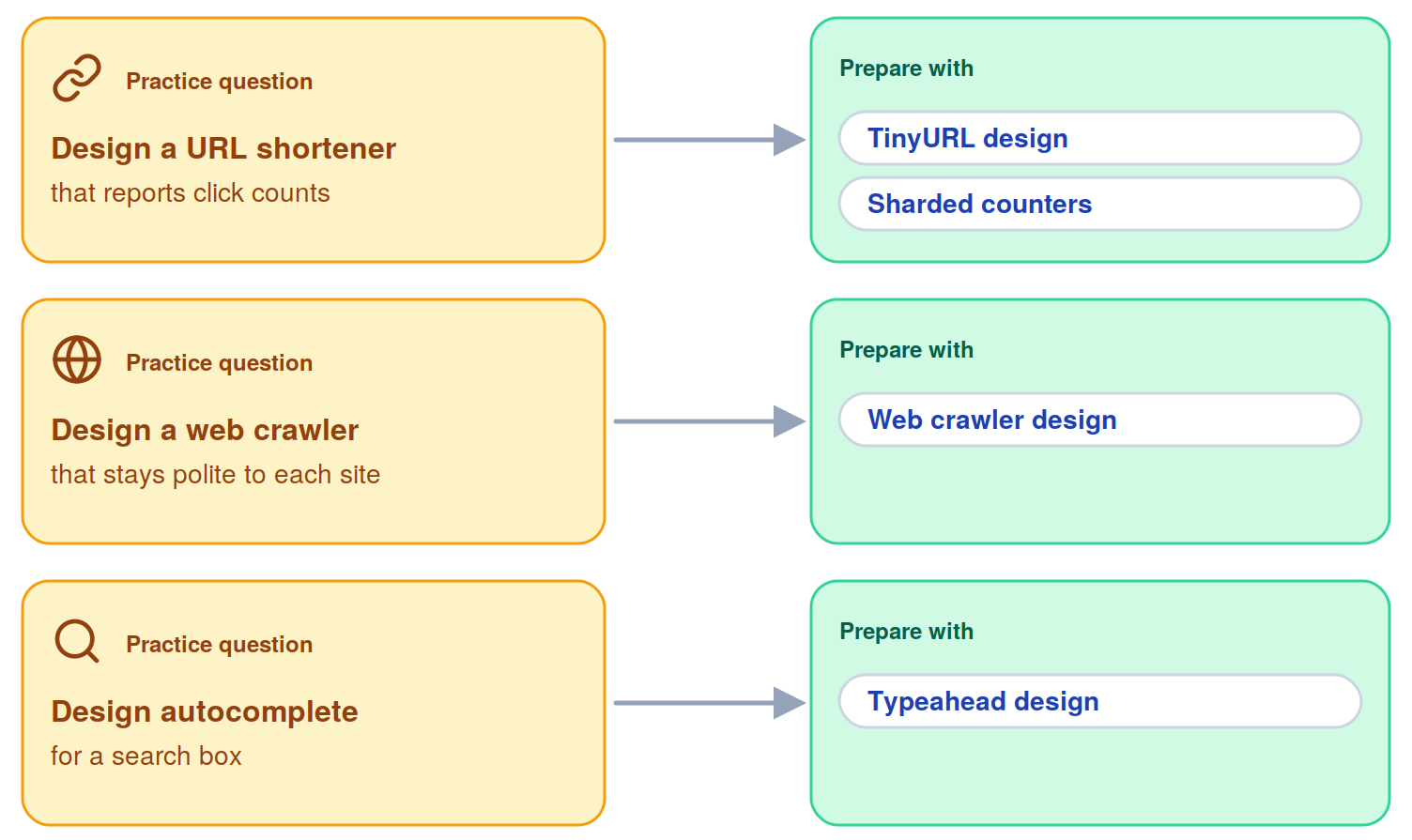
Each of these is a course design with one change, which keeps the review focused.
Rate limiter and notification service
4. Design a rate limiter for a public API
Go back to the rate limiter lessons. They list a rule database, a rules retriever, a throttle rules cache, a decision-maker, and a client identifier builder, and they compare the token bucket, leaking bucket, fixed window, sliding window log, and sliding window counter.
Start from a traffic pattern you choose for an application programming interface (API). Pick one algorithm for it, and say what the client sees when it is over the limit, which is Hypertext Transfer Protocol (HTTP) status 429 in the lesson.
5. Design a notification service for push, email, and text
Open the pub-sub design lesson. Its first design gives every consumer a queue, which gets expensive with millions of subscribers across thousands of topics, and its second uses brokers with partitioned topics and a cluster manager that watches broker health.
Make it harder by delivering across three channels. Decide where duplicate requests are dropped, since the messaging queue design deduplicates at its frontend.
The pub-sub design lesson ties delivery guarantees to consumer managers that track offsets, so that is where to look when you make the choice.
6. Design a system that sends scheduled reminders
Review the distributed task scheduler lessons. They sort tasks into those that can’t be delayed, those that can, and those that repeat on a schedule, and they move a delayed task to the urgent queue as its limit approaches so it isn’t starved.
Stress it with a very large number of reminders due in the same minute. Plan how to spread that burst.
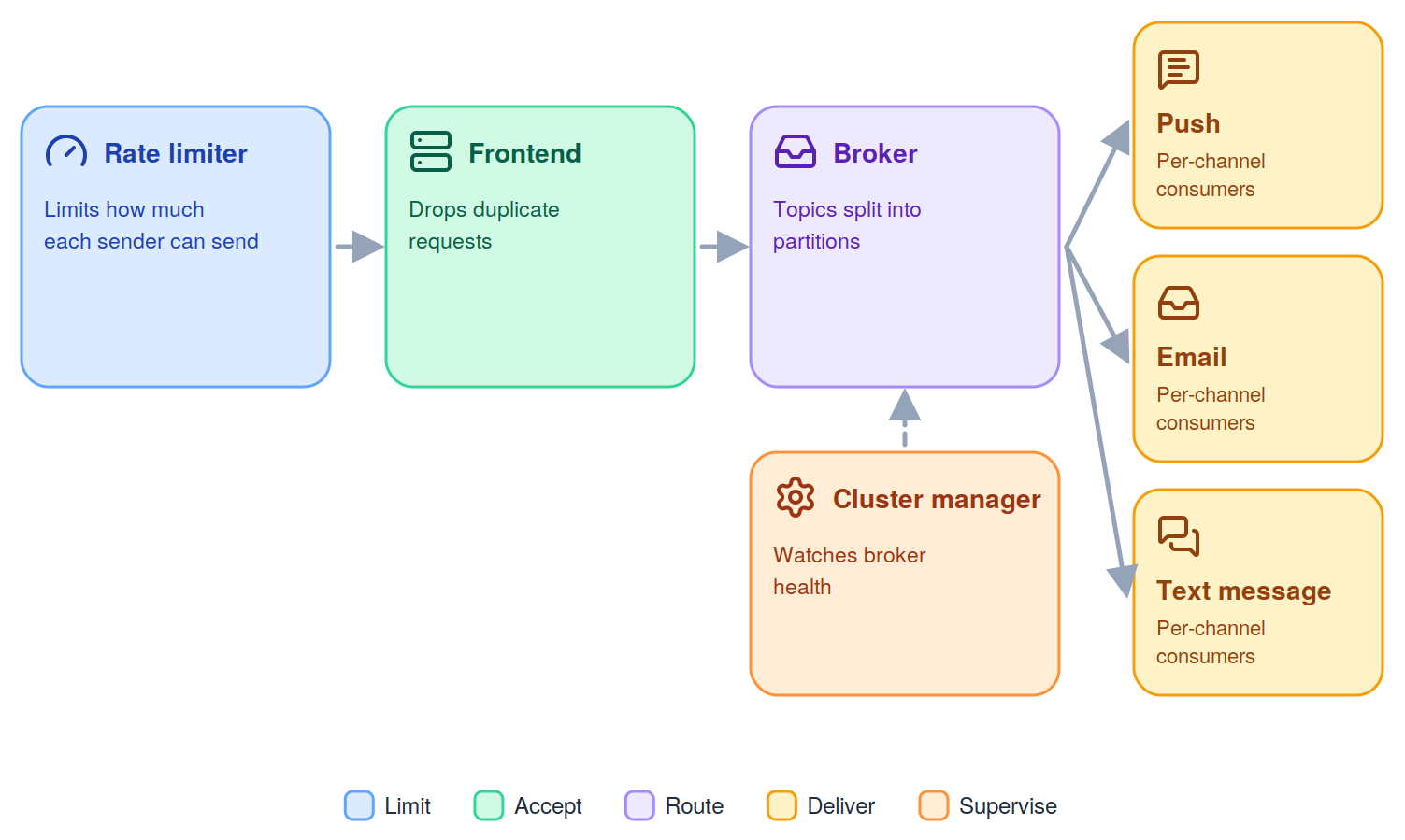
These three share one habit, which is naming where work waits and what happens when it waits too long.
Ticketing and hotel booking
7. Design a ticket booking system for popular events
Pull up the Ticketmaster case study. Its reliability requirement is to prevent double-booking and seat overselling, and its API confirms a booking after payment.
Add a hold, where a seat is reserved briefly while payment completes. Work out what happens when a hold expires or a payment fails.
8. Design a hotel booking system
No lesson covers hotels directly, so combine three. The Ticketmaster case study covers double-booking, the data replication lesson compares synchronous and asynchronous replication, and the payment system lessons cover charging.
A room is booked for a range of nights, which changes the problem. Decide which steps need strong consistency and which can lag.
For a hotel, that is the step that assigns a room to a guest, so give it your strongest consistency guarantee.
9. Design a flash-sale checkout
Review the Prime Day case study on scaling for high-demand periods, and the estimation lesson, which shows how the peak assumption changes the answer. For one service it moves from 2 servers to 8 to about 157,000.
Checkout must not oversell stock, which raises the stakes. State your peak assumption, then put a rate limiter and a queue in front of the stock check.
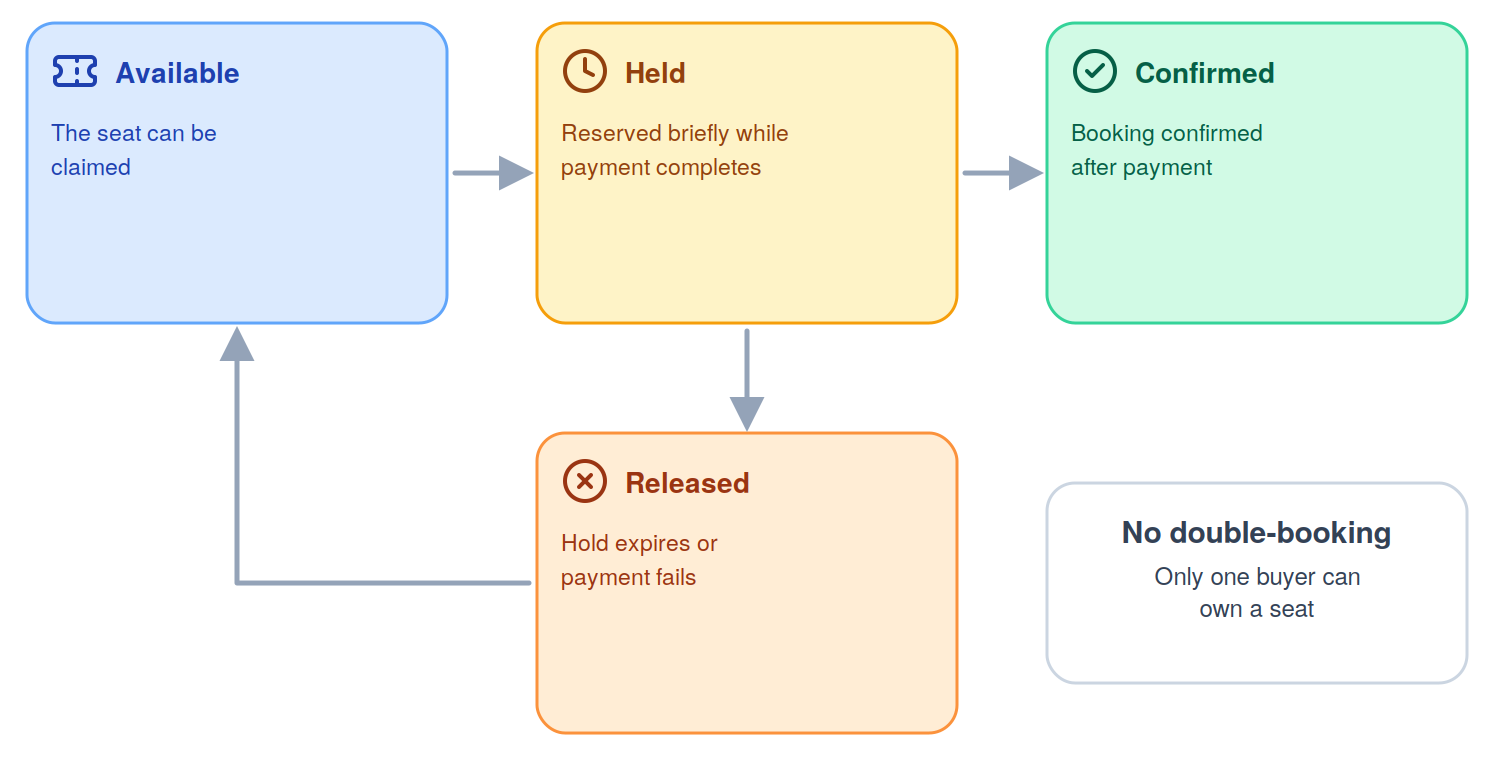
Booking problems come down to one rule, which is that only one buyer can own a seat or a room.
Leaderboard and live comments
10. Design a real-time leaderboard
Draw on the sharded counters lessons, which show how to avoid contention on one hot counter, and the distributed cache lessons, which cover eviction and write policies such as write-through.
Ask for a top-100 view across a very large player base. Settle whether ranks must be exact or may lag, and where the top list lives.
11. Design live comments for a streaming video
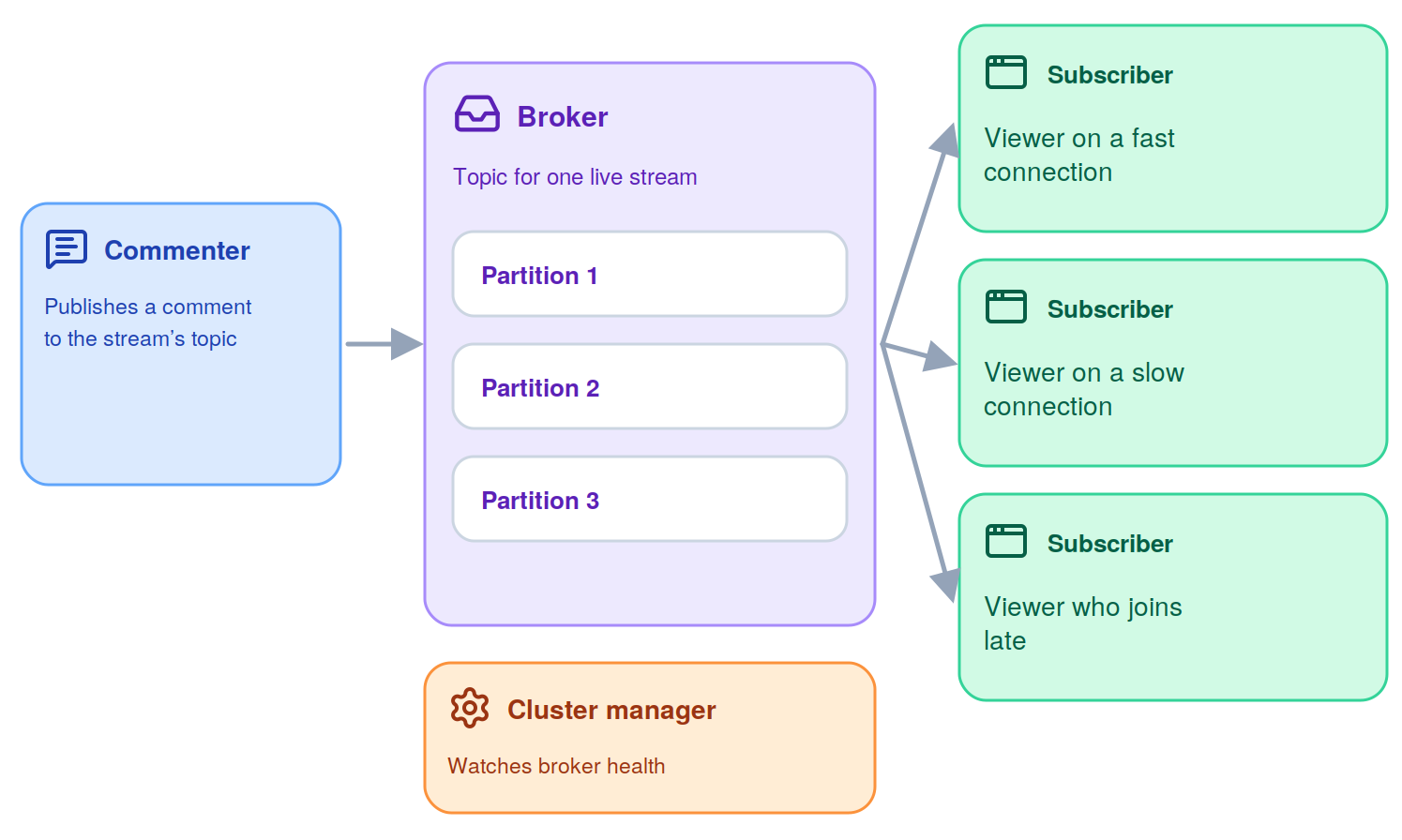
Pub-sub fits naturally. The lesson’s own example is a social media post, where the author is the publisher, the post is the message, and the followers are the subscribers.
The YouTube design adds delivery through content delivery networks (CDNs) and eventual consistency for video feeds. Picture an audience of millions on uneven connections. Decide how ordering and slow viewers are handled.
If exact order matters for comments, say so early, because it changes how you partition the stream.
12. Design a live like and view counter
The sharded counters lessons give the createCounter, writeCounter, and readCounter APIs, choose the shard count from follower count and post type, and aggregate shards when reading.
Interrupt a large upload partway through. Decide whether the read fails, returns a partial result, or serves a cached approximate value.
A counter, a leaderboard, and a comment stream all reward the same question, which is how much accuracy the product really needs.
Distributed file storage and metrics system
13. Design a distributed file storage service
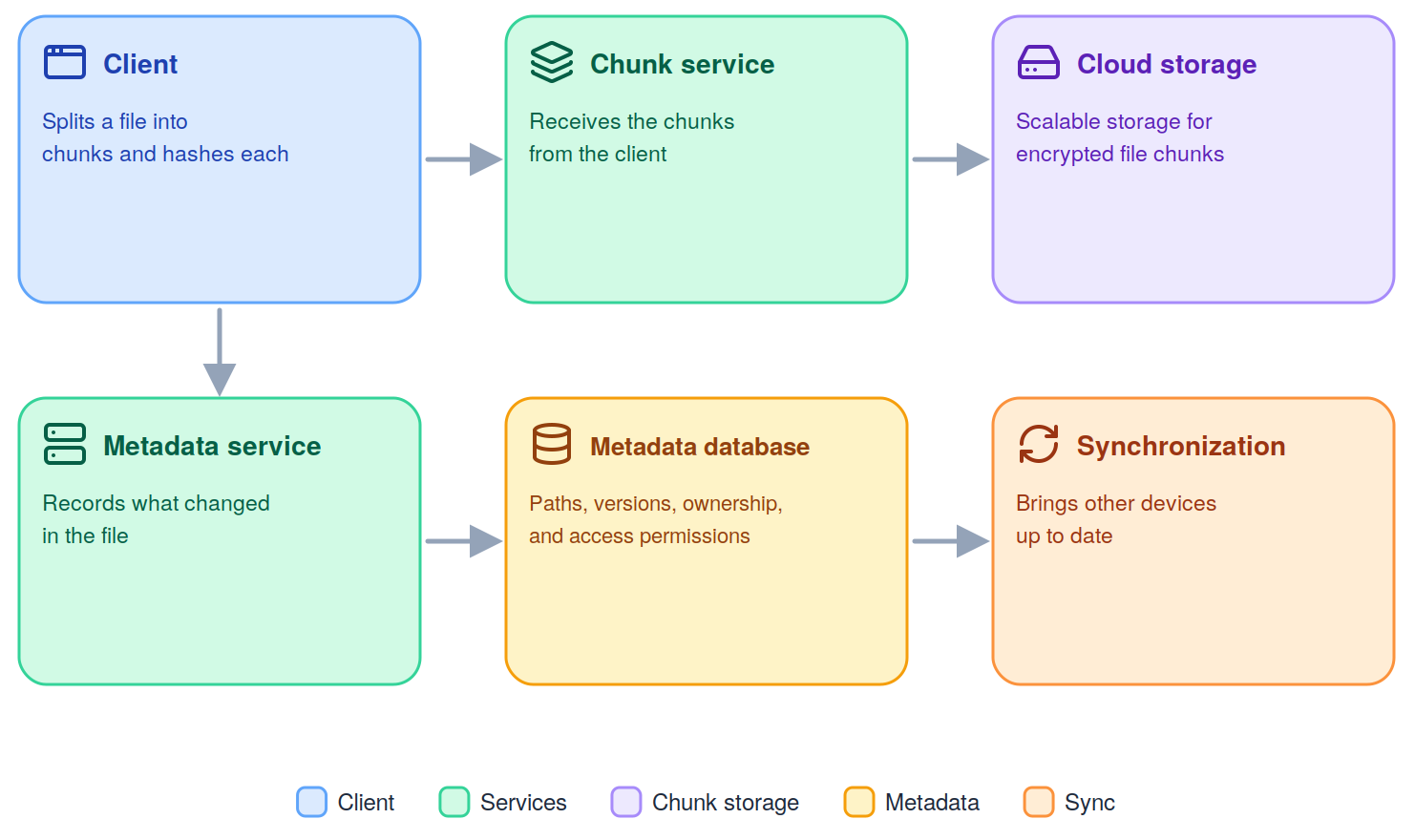
Work from the Dropbox case study. It separates a metadata database for file paths, versions, ownership, and permissions from cloud storage for encrypted file chunks, and it chunks files and hashes each chunk. The blob store lessons add large-object storage.
The twist is a large upload that is interrupted. Decide how the upload resumes and how two devices that edit the same file are handled.
14. Design a metrics and monitoring system
Use the monitoring chapters. They cover a design that tracks process crashes, resource use, service health, network latency, and hardware errors, with metric collectors, a query API, and a time-series database, plus a separate lesson on client-side errors.
Alert noise becomes the problem to solve. Choose how often to collect metrics and how to alert without flooding the on-call engineer, and keep monitoring outside the failure domain it watches.
In monitoring, the write path is metric collection and the read path is queries and alerts, and each one scales differently.
15. Design a distributed logging service
The distributed logging lesson lists writing, searching, storing, and visualizing logs, and requires that logging not block the application’s critical path. It builds on a pub-sub system and distributed search.
Send a traffic spike that produces far more logs than usual. Choose what is buffered, what is dropped, and how you would trace one request across services.
Pick three questions from different sections and answer each out loud against a clock. After each one, reread the lesson that prepared you and mark what you missed. Repeat your weakest question a week later with one new constraint. If you have a Premium or Premium Plus plan, use a course mock for one of the building blocks to check your answers under follow-up questions.